
Duluth, GA · Garage Door Service
Why Garage Doors Drift Off Track in Duluth Homes
Duluth's homes, built 1951-2012, carry track hardware that shifts with cold, humid swings. Here's why garage doors go off track and what fixing it takes.
- Repairs & new doors
- Springs & openers
- Serving 4 nearby communities
The Cost of This Job
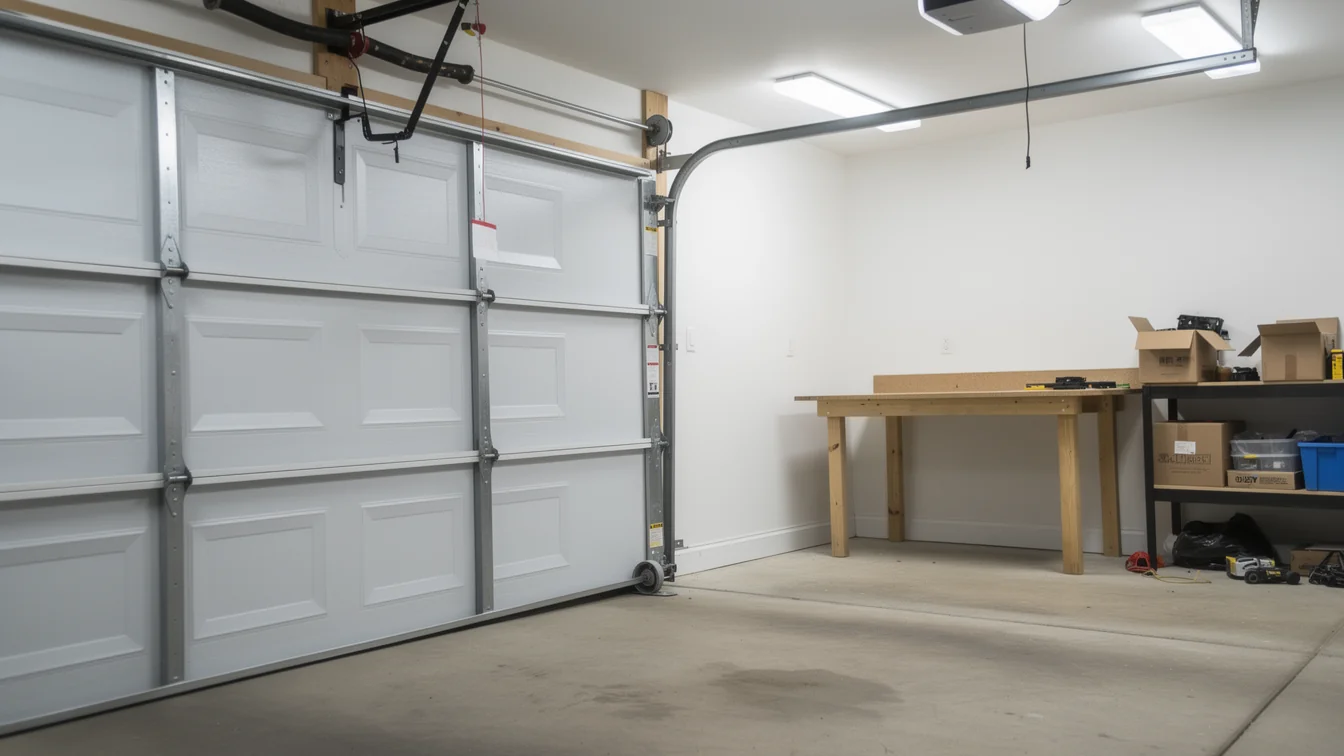
We can't give you a number without looking at the door, and anyone who quotes a flat price over the phone for a track job is guessing. What drives the cost here is the age of the hardware, and Duluth's housing stock runs from 1951 to 2012, with a median build year of 1984 and most of the 20-plus named neighborhoods in this service area filled in during the 1980s and 90s. Doors from that run shipped with lighter-gauge steel track bent to a tighter radius than what's standard now. When a roller seizes or a cable frays on that older rail, you can't just swap the one bad part - new rollers often won't seat right on the old bend, so the whole track comes out.
At a median household income of $85,481 across this area, a lot of owners decide at that point to replace the full track and hardware set rather than patch a 40-year-old rail that's going to need the same fix again in two years. That's not a sales pitch, it's just the math most people land on once a tech has the door open and shows them the wear. We'll tell you straight if a patch will hold or if you're better off swapping the whole run.
What the Weather Here Does to It
This area sits in a cold-moderate climate band, which means real winter swings but nothing like the deep freeze states further north. Those swings still matter to a garage door. Steel track contracts when it's cold and expands again once temperatures climb back up, and on a 30 to 40-year-old rail that cycle works bolts loose at the jamb - especially in homes from the 1980s and 90s, where track was commonly lagged straight into wood framing rather than into the steel reinforcement plates you'd see in builds after 2000.
Once a few bolts walk loose, the track isn't sitting plumb against the frame anymore. The door still looks fine sitting shut, but the rollers start riding the edge of the rail instead of the center, and that's the start of a door coming off track on the next cold, damp morning. It's a slow problem, not a sudden one, which is why most people don't catch it until the door actually jumps the rail.
The Seasonal Bit
The jump usually happens on the first hard cold snap of the year, not in the dead of summer. Metal track that's been sitting loose all through the warm months finally contracts enough in a cold morning for a roller to walk off the edge, and the door binds or drops crooked in the opening. If your house falls into that 1980s-to-90s band of construction that makes up most of this area's housing stock, that's the hardware most likely to be due.
Spring tension plays into it too. Torsion springs lose a small amount of lift on cold mornings as the metal stiffens, and an opener that's already fighting a slightly misaligned track will strain harder to pull the door up, which speeds up wear on the same rollers and brackets that are already loose. A once-a-year check before the first cold stretch - bolts, rollers, the track's plumb line - catches most of this before it turns into a Saturday morning the door won't move at all.
The Situation
Across this service area's roughly 79,646 households, with 35,387 of them owner-occupied, a good share of the houses are now old enough that the original track and hardware are simply wearing out on schedule. That's not a defect, it's just where a lot of 1980s and 90s construction is in its life right now. Neighborhoods within a few miles - Berkeley Lake two miles out, Sugar Hill and Doraville around nine - sit in the same build-year range and show the same pattern on service calls: a roller that's finally had enough, a bracket pulled loose from years of cold-season contraction.
If your door has come off track once already, it's worth having someone look at the whole rail, not just the spot where it jumped, because the same age and the same weather cycle that caused it once will cause it again somewhere else on the same track within a season or two.
Frequently asked questions
Why did my garage door suddenly jump off its track?
Most of the time it's not sudden at all - bolts holding the track to the jamb have been working loose for a while, often from seasonal temperature swings, and a roller finally rode off the edge of the rail. Given that a lot of this area's homes were built in the 1980s and 90s, the hardware behind that bracket is often original.
Is the cold weather really why this happened?
It's a real factor here. This area sits in a cold-moderate climate band, and the contraction and expansion of steel track through winter swings loosens bolts over years, especially on older homes where track was lagged into wood framing rather than reinforced steel. It's rarely the only cause, but it speeds up wear that's already there.
Can I just push the door back onto the track myself?
You can sometimes get it back on the rail, but if the track's bent or the bolts are loose at the jamb, it'll jump again, often worse. We'd rather you leave the door down and call than force it, since a door forced back onto a bent track can bind the opener or snap a cable.
Do I need a whole new track or just a repair?
Depends on what the tech finds once the door's open. If it's one loose bracket, that's a quick fix. If the rail itself is bent or the rollers won't seat on the old bend radius - common on hardware from the 1980s and 90s building run here - a full track swap usually holds up better long-term than patching it twice.
Related garage door services in Duluth
More garage door guides
Book garage door service in Duluth
Call now or request a quote - tell us what the door is doing and where you are.